The Complete F-1 US Student Visa Guide for African Applicants
Everything from I-20 to interview, written specifically for applicants in Lagos, Accra, Nairobi, Johannesburg, Addis Ababa and Kampala. The forms, the fees, the questions and the documents that get African students approved.
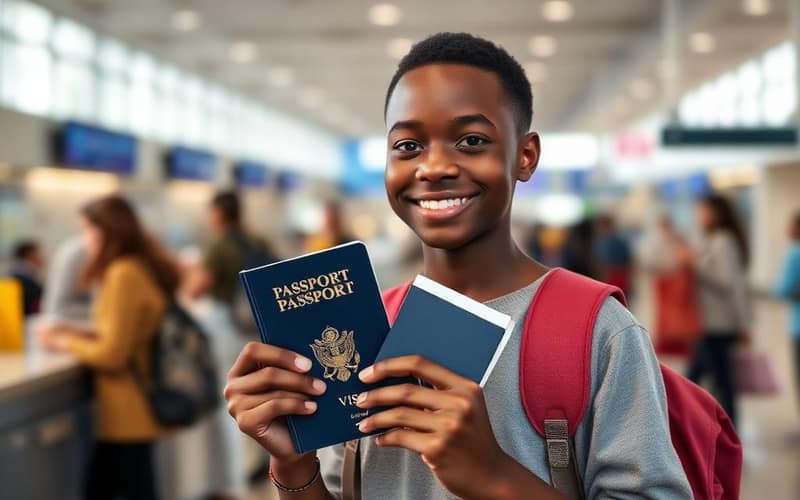
The F-1 is the standard student visa for the United States. African applicants face higher refusal rates than students from most other regions — not because the application is harder, but because most don't prepare for the one thing the consul actually decides on: non-immigrant intent.
This guide walks through every step in order, with the official source links you should bookmark. Pair it with our US scholarships hub if you're still finalising your funding.
What an F-1 visa actually is
The F-1 is a non-immigrant visa for full-time academic study at a SEVP-certified US institution. It allows you to:
- Enter the US up to 30 days before your programme start date.
- Stay for the duration of your studies plus a 60-day grace period.
- Work on-campus up to 20 hours/week during term.
- Apply for OPT — up to 12 months (36 for STEM) of post-study work authorisation.
The official reference is the US Department of State student visa page. Always cross-check timelines against your local US embassy site — Nigeria, Kenya, Ghana, South Africa — wait times vary widely.
The seven steps from acceptance to airport
Step 1 — Get your I-20 from the school
After you accept admission and submit financial documentation, the university's Designated School Official (DSO) issues a Form I-20. Verify every detail (name, date of birth, programme, funding) before signing — corrections after issuance take weeks.
Continue reading
Hand-picked guides that pair with this article.
- Application Tips
Scholarship Interview Playbook for African Applicants
Prepare for scholarship interviews: practice questions on leadership, impact, research and funding need, answer frameworks, virtual tips and what to do after.
14 min read
- Live Shortlist
Scholarships Verified This Month
Every fully funded scholarship our editors re-verified at the official source within the last 30 days — auto-updated from the live catalogue.
Live · last 30 days
- Live Shortlist
Scholarships Closing Soon: Apply This Quarter
An auto-updated shortlist of fully funded scholarships for African students with deadlines in the next 90 days — refreshed live from our verified catalogue.
Live · 90-day window
Step 2 — Pay the SEVIS I-901 fee
USD 350 paid to the US Department of Homeland Security. Print the receipt — you'll need it physically at the interview.
Pay SEVIS at fmjfee.comContinue reading
Hand-picked guides that pair with this article.
- Application Tips
Scholarship Interview Playbook for African Applicants
Prepare for scholarship interviews: practice questions on leadership, impact, research and funding need, answer frameworks, virtual tips and what to do after.
14 min read
- Live Shortlist
Scholarships Verified This Month
Every fully funded scholarship our editors re-verified at the official source within the last 30 days — auto-updated from the live catalogue.
Live · last 30 days
- Live Shortlist
Scholarships Closing Soon: Apply This Quarter
An auto-updated shortlist of fully funded scholarships for African students with deadlines in the next 90 days — refreshed live from our verified catalogue.
Live · 90-day window
Step 3 — Complete the DS-160 online
The non-immigrant visa application. It autosaves with an application ID — write that ID down. Upload a passport-style photo that meets US specs (white background, 5×5 cm, no glasses).
Start the DS-160Continue reading
Hand-picked guides that pair with this article.
- Application Tips
Scholarship Interview Playbook for African Applicants
Prepare for scholarship interviews: practice questions on leadership, impact, research and funding need, answer frameworks, virtual tips and what to do after.
14 min read
- Live Shortlist
Scholarships Verified This Month
Every fully funded scholarship our editors re-verified at the official source within the last 30 days — auto-updated from the live catalogue.
Live · last 30 days
- Live Shortlist
Scholarships Closing Soon: Apply This Quarter
An auto-updated shortlist of fully funded scholarships for African students with deadlines in the next 90 days — refreshed live from our verified catalogue.
Live · 90-day window
Step 4 — Pay the MRV (visa application) fee
USD 185, paid through your country's US visa portal (GSS, US Travel Docs, or VFS depending on country). Keep the receipt — you cannot book the interview without it.
US Travel Docs portalContinue reading
Hand-picked guides that pair with this article.
- Application Tips
Scholarship Interview Playbook for African Applicants
Prepare for scholarship interviews: practice questions on leadership, impact, research and funding need, answer frameworks, virtual tips and what to do after.
14 min read
- Live Shortlist
Scholarships Verified This Month
Every fully funded scholarship our editors re-verified at the official source within the last 30 days — auto-updated from the live catalogue.
Live · last 30 days
- Live Shortlist
Scholarships Closing Soon: Apply This Quarter
An auto-updated shortlist of fully funded scholarships for African students with deadlines in the next 90 days — refreshed live from our verified catalogue.
Live · 90-day window
Step 5 — Book biometrics + interview
Two appointments at most African embassies: an OFC (biometrics) appointment and the consular interview. Book both — the system rarely auto-pairs them. Prefer Tuesday/Wednesday morning slots when consuls are freshest.
Continue reading
Hand-picked guides that pair with this article.
- Application Tips
Scholarship Interview Playbook for African Applicants
Prepare for scholarship interviews: practice questions on leadership, impact, research and funding need, answer frameworks, virtual tips and what to do after.
14 min read
- Live Shortlist
Scholarships Verified This Month
Every fully funded scholarship our editors re-verified at the official source within the last 30 days — auto-updated from the live catalogue.
Live · last 30 days
- Live Shortlist
Scholarships Closing Soon: Apply This Quarter
An auto-updated shortlist of fully funded scholarships for African students with deadlines in the next 90 days — refreshed live from our verified catalogue.
Live · 90-day window
Step 6 — Assemble your document file
Bring originals plus one photocopy of each. Order them: passport, DS-160 confirmation, MRV receipt, SEVIS receipt, I-20, admission letter, scholarship letter (if any), bank statements (6 months), academic transcripts, standardised test scores, ties-to-home documents.
Continue reading
Hand-picked guides that pair with this article.
- Application Tips
Scholarship Interview Playbook for African Applicants
Prepare for scholarship interviews: practice questions on leadership, impact, research and funding need, answer frameworks, virtual tips and what to do after.
14 min read
- Live Shortlist
Scholarships Verified This Month
Every fully funded scholarship our editors re-verified at the official source within the last 30 days — auto-updated from the live catalogue.
Live · last 30 days
- Live Shortlist
Scholarships Closing Soon: Apply This Quarter
An auto-updated shortlist of fully funded scholarships for African students with deadlines in the next 90 days — refreshed live from our verified catalogue.
Live · 90-day window
Step 7 — The interview
Three to seven minutes. Stand confidently, make eye contact, answer in one or two clear sentences. Most decisions are made in the first 30 seconds — the documents only matter if the consul asks for them.
Continue reading
Hand-picked guides that pair with this article.
- Application Tips
Scholarship Interview Playbook for African Applicants
Prepare for scholarship interviews: practice questions on leadership, impact, research and funding need, answer frameworks, virtual tips and what to do after.
14 min read
- Live Shortlist
Scholarships Verified This Month
Every fully funded scholarship our editors re-verified at the official source within the last 30 days — auto-updated from the live catalogue.
Live · last 30 days
- Live Shortlist
Scholarships Closing Soon: Apply This Quarter
An auto-updated shortlist of fully funded scholarships for African students with deadlines in the next 90 days — refreshed live from our verified catalogue.
Live · 90-day window
Document checklist (in interview order)
- Passport valid 6+ months beyond intended stay.
- DS-160 confirmation page with barcode.
- MRV fee receipt (USD 185).
- SEVIS I-901 receipt (USD 350).
- Original Form I-20 — signed by you and your DSO.
- University admission letter.
- Scholarship/funding award letter (if applicable).
- 6 months of bank statements showing first-year funds.
- Academic transcripts & certificates.
- Standardised test scores (TOEFL/IELTS, GRE/GMAT, SAT).
- Ties to home: family land/title deed, parental employment letter, return job offer, sibling dependants.
- 2× passport photos (US specs).
Interview questions you will be asked
Common across Lagos, Accra, Nairobi and Johannesburg consulates:
- Why this university? (Name 2 specific professors or labs.)
- Why this programme? (Tie to your career plan.)
- Why the United States and not your home country or another country?
- Who is funding your studies? (Be precise — scholarship name, amounts.)
- What does your sponsor/parent do for a living?
- What will you do after you graduate? (Always: return home with specifics.)
- Have you been to the US before?
- Do you have family in the US?
Answer in 1–2 confident sentences. Do not volunteer extra information. Do not memorise — sound like yourself.
If you're refused under 214(b)
A 214(b) refusal means the consul wasn't convinced you'd return home. It isn't a ban — you can reapply. Before you do:
- Strengthen ties documentation (job offer, family business, property).
- Tighten your post-study plan — name the city, employer, role you'll return to.
- Wait 4–8 weeks before reapplying so circumstances visibly change.
- Pay a fresh MRV fee — it's not refunded between attempts.
Your next step
If you don't yet have a US scholarship, browse the US scholarships hub. If you're still drafting essays, our essay framework covers what selection panels actually score. And if you're weighing other destinations, see Canada, the UK and the Netherlands.
Frequently asked questions
- How early should I apply for the F-1 visa?
- You can schedule your interview up to 365 days before your programme start date but you can only enter the US within 30 days of it. Aim to interview 2–4 months before classes start — embassy queues in Lagos, Accra, Nairobi and Johannesburg often run 60–120 days.
- What's the most common reason African students get refused?
- Section 214(b) — failure to prove non-immigrant intent. The interviewer must believe you intend to return home after your studies. Strong ties (family, property, job offer letter, business) and a clear post-study plan are how you address it.
- Do I need to show bank statements?
- Yes. You must prove ability to cover the first year listed on your I-20. A scholarship award letter counts toward this. Cash deposits made days before the interview look suspicious — the consular officer can see the deposit history.
- Can I work on an F-1 visa?
- On-campus work up to 20 hours/week during term, full-time during breaks. Off-campus work requires CPT (Curricular Practical Training) or OPT (Optional Practical Training) authorisation. Working without authorisation terminates your status immediately.
- What if my visa is refused?
- A 214(b) refusal is not permanent. You can reapply once you have new evidence (better ties, clearer post-study plan, updated funding). Most successful African reapplicants succeed on the second or third interview with stronger documentation.
Find your US scholarship
Fully funded US awards open to African applicants — Fulbright, MasterCard Foundation, university scholarships and more.
See US scholarships
Comments
Comments are reviewed by our team before publishing — we keep this space respectful and on-topic.
Loading comments…
Leave a comment
Loading…